
Description
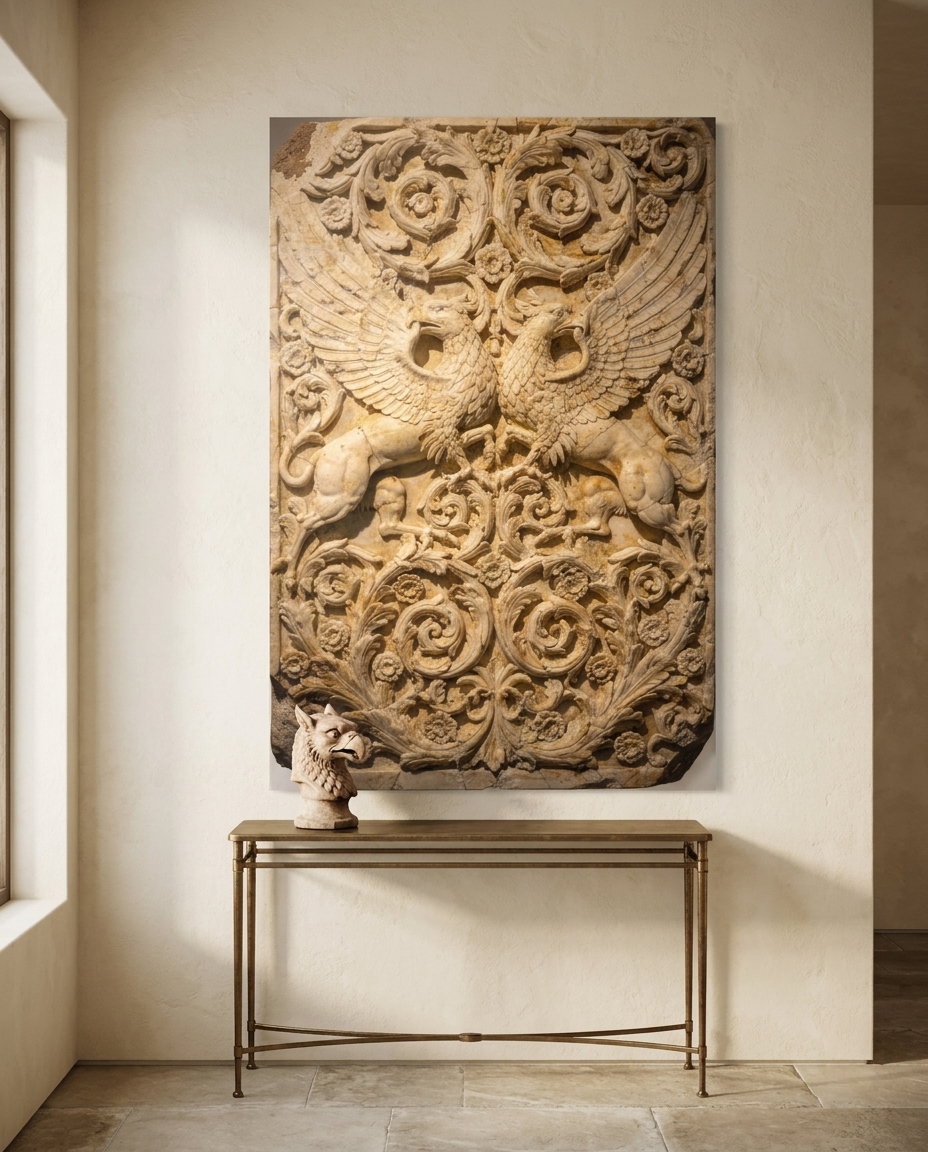
This piece captures the profound kinetic energy of the Hellenistic spirit, where stone ceases to be static and begins to breathe. Two majestic griffins rise in perfect symmetry from a flourishing garden of acanthus vines, their wings poised with a tension that suggests imminent flight. The depth of the carving creates a dramatic play of chiaroscuro, trapping natural shadows within the warm, honeyed tones of the relief to accentuate every feather and petal.
Living with this work is an exercise in timelessness. It serves as a grounding force, connecting a contemporary interior to the intellectual and aesthetic heights of classical antiquity. Its presence does not just decorate a wall; it establishes a sense of permanence and lineage, offering a quiet, stony strength that anchors the room’s atmosphere in a legacy of architectural excellence.
Purpose
This work seeks to evoke the grandeur of ancient monuments, expressing the balance between fierce guardian spirits and the organic fluidity of nature’s growth.
Perfect For
- Seekers of classical beauty who value symmetry and historical depth in their surroundings.
- Collectors who appreciate the intersection of botanical detail and mythological symbolism.
- Those wishing to instill an atmosphere of authority, wisdom, and heritage within a professional or private space.
Interior Decorator’s Advice
- Position this as a singular focal point on a dark, matte-finished wall to let the warm tones of the stone truly glow.
- Utilize directional grazing light from above to maximize the dramatic shadows cast by the deep-relief carving.
- Pair with minimalist, high-end furniture to allow the intricate complexity of the acanthus scrolls to be the primary visual narrative.
From the Hellenistic Art collection:
There came a moment, when Alexander’s empire broke into kingdoms reaching from the Aegean to the Indus, that Greek art loosened its cool composure and discovered emotion. The serene balance of the classical age gave way to movement and drama: sculptors carved marble until it behaved like wet cloth, goldsmiths wove oak and myrtle into ornaments that seem lit from within, and theatre, luxury and feeling became subjects worthy of art. This collection gathers that spirit — the winged figure braced against the gale, the veiled dancer caught mid-turn, the downcast head, the acanthus unfurling at dusk.
No single piece reproduces a surviving relic; each is an imagined homage to a threshold in Western art, the instant restraint surrendered to pathos and splendour. To move through these eight works is to trace that turn from stillness to breath, from ideal to ache. To live with them is to keep, on your own wall, the golden cosmopolitan world that grief and grandeur once shared.
Key Features
- Material: High-definition Lambda Print — true silver-halide photographic exposure (Fuji Crystal DP II for colour, Ilford for black & white) on premium acrylic glass, glossy finish for exceptional depth and clarity.
- Finish: Face-mounted under 4 mm premium acrylic glass — Diasec technique.
- Backing: 3 mm alu Dibond composite panel.
- Style: Ancient Egyptian Art
- Edition: Unlimited.
- Mounting: Recessed aluminium subframe — ready to hang (invisible wall mounting, 25 mm offset).
- Longevity: 50–75 years archival conservation.


Reviews
There are no reviews yet