
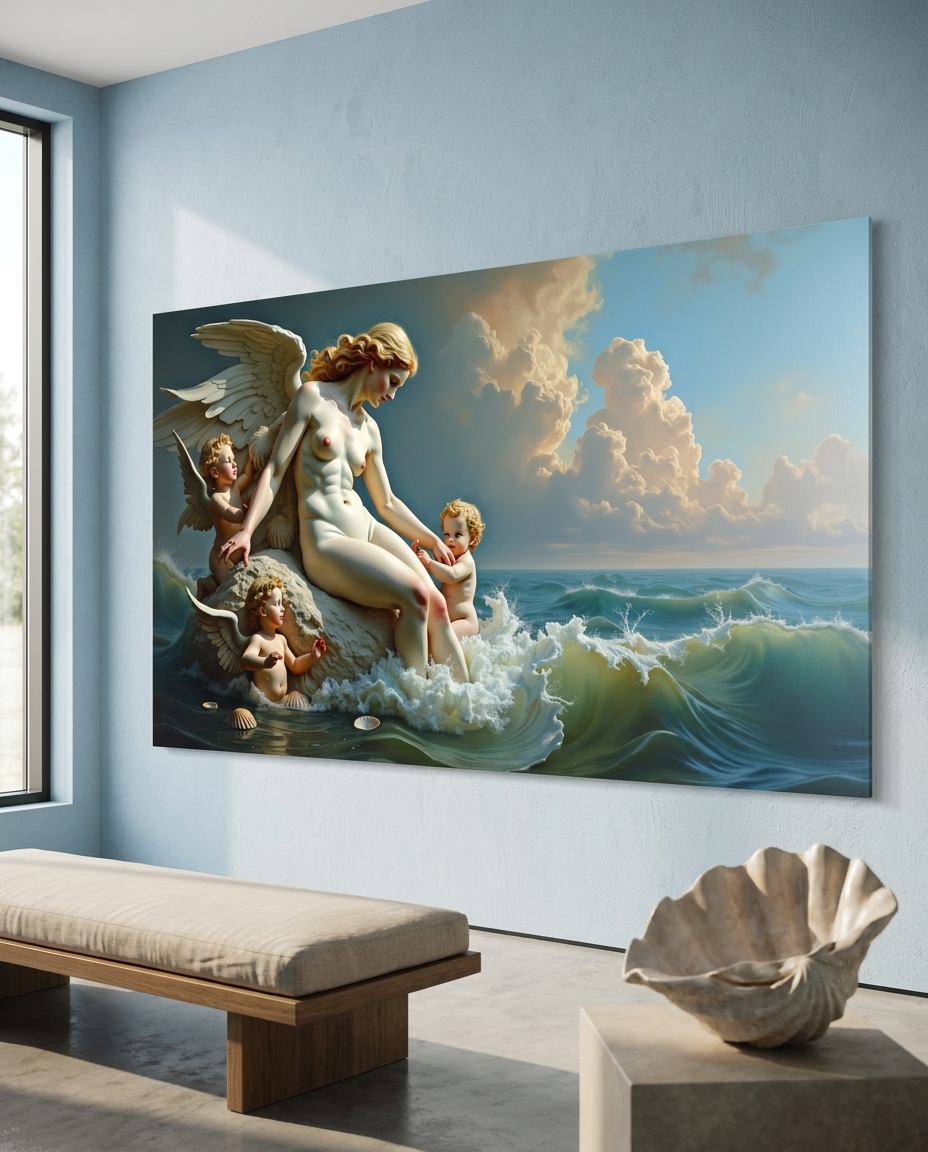
Description
This composition breathes new life into the mythic birth of Venus, capturing the goddess not merely as a figure of beauty, but as a monument of serenity amidst the churning tides. Her skin, possessing the ethereal sheen of polished marble, catches a warm, diffuse light that balances the cool emerald depths of the water. The accompanying cherubs, with their playful devotion, ground the scene in a sense of joyous movement, contrasting against the vast, sculptural silence of the towering cumulus clouds.
Living with this work is an invitation to pause and reconnect with the ideals of harmony and proportion. It serves as a visual anchor that softens the modern environment, replacing the noise of the day with a cinematic, oceanic stillness. The interplay of soft pastels and deep sea-foam creates a sophisticated palette that feels both historically grounded and strikingly contemporary.
Purpose
To evoke a sense of timeless perfection and classical poise, transforming the raw power of the ocean into a stage for divine grace and aesthetic balance.
Interior Decorator’s Advice
- Position this piece where it can catch natural morning light to enhance the luminous, porcelain-like quality of the figures.
- Pair with minimalist furniture in cream or driftwood tones to allow the complex textures of the waves and clouds to lead the room.
- Use a wide, neutral wall to provide the necessary ‘breathing room’ for the expansive horizon and architectural cloud formations.
Perfect For
- Collectors drawn to the intersection of classical mythology and high-definition digital precision.
- Those who seek a centerpiece that embodies both feminine strength and tranquil elegance.
- Aficionados of the Old Masters who desire a modern reimagining of traditional figurative beauty.
From the Reviving The Classics collection:
Each work in this collection reaches back to the age of marble and myth, when painters of the Neo-Classical era, drawn to the calm order and noble subjects of ancient Greece and Rome, sought beauty in balance and meaning in restraint. Here those subjects return with fresh breath: Venus rising from the sea, Apollo driving his chariot across the sky, the wisdom of Athens and the quiet triumph of virtue. The arc moves from creation to courage, from study to enlightenment, a slow procession through the ideals that shaped how we imagine grace.
To live with these images is to keep good company with the eternal. They carry a composure that steadies a room and a depth that rewards the second look, the third, the hundredth. There is grandeur here, but it is generous rather than distant, inviting you in rather than holding you at arm’s length. For anyone who longs for a touch of timeless dignity at home, this is antiquity made intimate, the heroic brought close enough to touch.
Key Features
- Material: High-definition Lambda Print — true silver-halide photographic exposure (Fuji Crystal DP II for colour, Ilford for black & white) on premium acrylic glass, glossy finish for exceptional depth and clarity.
- Finish: Face-mounted under 4 mm premium acrylic glass — Diasec technique.
- Backing: 3 mm alu Dibond composite panel.
- Style: Neo-Classicism
- Edition: Unlimited.
- Mounting: Recessed aluminium subframe — ready to hang (invisible wall mounting, 25 mm offset).
- Longevity: 50–75 years archival conservation.


Reviews
There are no reviews yet