Description
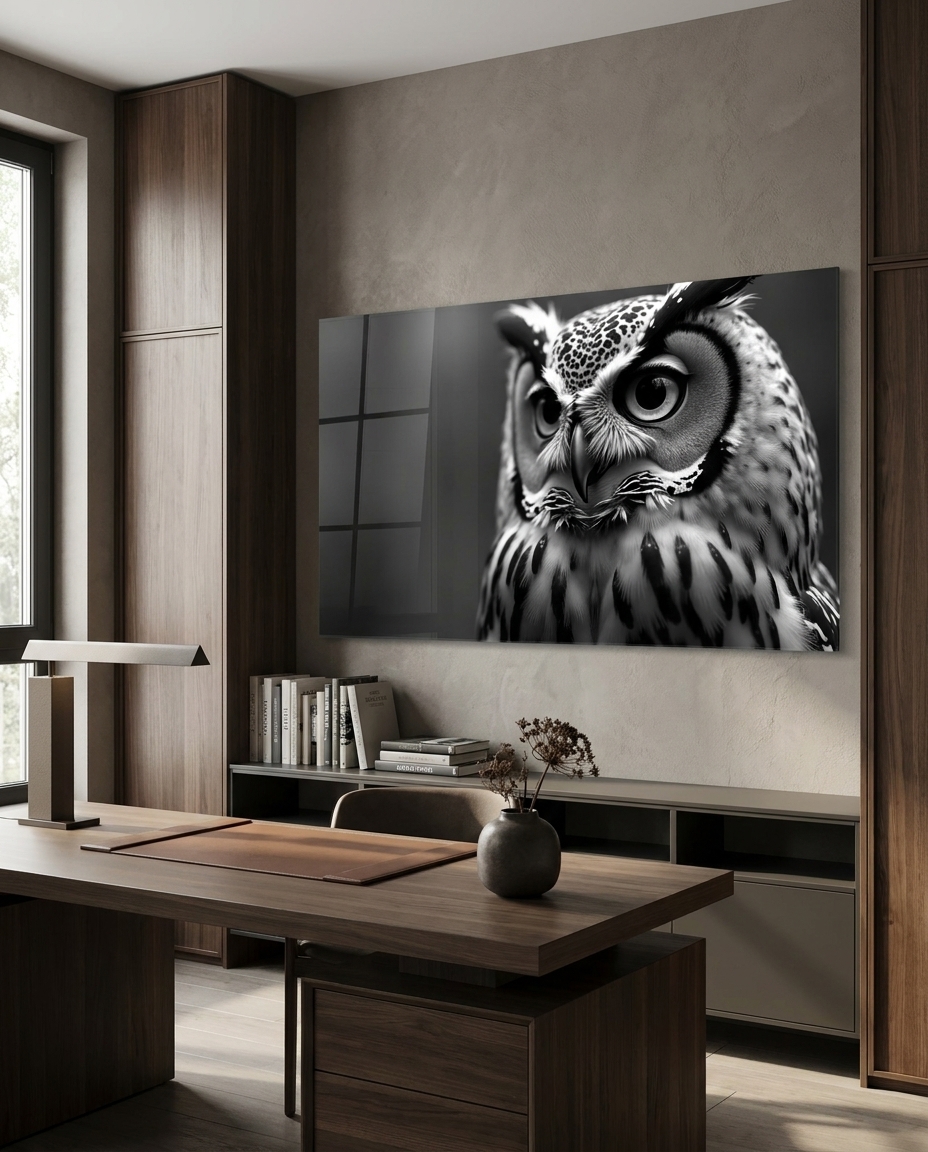
This striking monochrome study elevates the avian form to the level of high-fashion portraiture. Every micro-detail—from the velvet down of the facial disc to the obsidian depth of the eyes—is captured with a precision that demands quietude. The deliberate use of negative space and soft charcoal gradients allows the owl’s gaze to become the room’s focal point, bridgeing the gap between the wild and the refined.
Living with this piece is an exercise in presence. It does not shout; it watches. The high-contrast tonal range provides a sophisticated anchor for any interior, offering a moment of profound, wordless connection that shifts as the day’s natural light travels across its silvery highlights.
Purpose
This work seeks to evoke the ancient wisdom and predatory grace of the owl, transforming a wild subject into an icon of poise and intellectual depth through the lens of Harcourt-inspired studio lighting.
Perfect For
- Collectors who appreciate the intersection of natural history and cinematic aesthetics.
- The minimalist seeking a powerful, monochromatic focal point that retains an organic soul.
- Professionals who value the symbolism of vigilance and wisdom in their personal workspace.
Interior Decorator’s Advice
- Place this in a room with directional lighting to mimic the work’s inherent studio shadows.
- Mount on a neutral wall—think slate, dove grey, or crisp white—to let the tonal range breathe.
- Use a matte black frame to accentuate the deep blacks of the plumage and the pupil.
Key Features
- Material: High-definition Lambda Print — true silver-halide photographic exposure (Fuji Crystal DP II for colour, Ilford for black & white) on premium acrylic glass, glossy finish for exceptional depth and clarity.
- Finish: Face-mounted under 4 mm premium acrylic glass — Diasec technique.
- Backing: 3 mm alu Dibond composite panel.
- Style: Black-and-white portrait photography
- Edition: Unlimited.
- Mounting: Recessed aluminium subframe — ready to hang (invisible wall mounting, 25 mm offset).
- Longevity: 50–75 years archival conservation.


Reviews
There are no reviews yet